

Key Takeaways
- Annually: Social housing delivers a net income of £17,500, which is £2,710 higher than private renting.
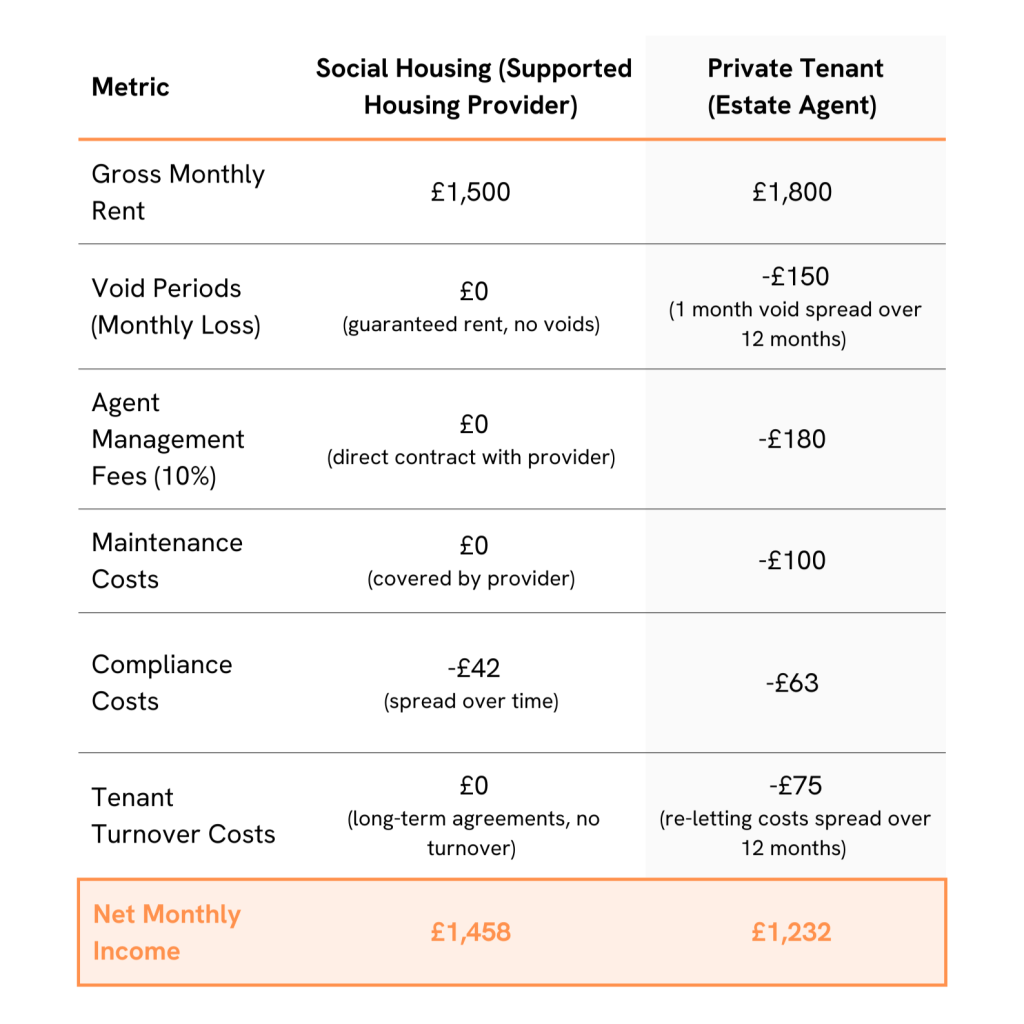
- Monthly: Social housing provides a net income of £1,458, which is £226 higher than private renting.
What is social housing?
Social housing—whether it involves supported living for individuals with special needs or affordable accommodation provided by local authorities or housing associations—can be a rewarding choice for landlords.
However, it may not suit everyone. In this article, I’ll outline the differences between social housing and the private rented sector (PRS) to help you decide which approach works best for you.
PRS vs. Social Housing: Key differences
Tenant Selection
In the PRS, landlords often select tenants personally or through letting agents. While this allows for careful vetting, it involves time and agent fees.
With social housing, the provider handles tenant selection entirely, saving time but requiring landlords to relinquish control over who occupies their property.
Tenancy Length
PRS tenancies are typically shorter (1-2 years), leading to higher turnover and additional costs for finding new tenants.
Social housing tenancies are usually longer (3+ years), offering more stability and reducing the hassle of frequent tenant changes.

Contracts
PRS contracts are often standardized, whether provided by letting agents or customized by landlords.
Social housing providers may insist on using their own contracts, which can be more complex and time-consuming to navigate.
Property Standards
Social housing providers often have stricter requirements for property standards. While this can complicate the onboarding process, it ensures your property is well-maintained.
Here’s the comparison, split into annual and monthly breakdowns:
Annual Financial Comparison

Monthly Financial Comparison
Conclusion
The table above highlights how social housing consistently outperforms private rentals on both annual and monthly bases, providing guaranteed rent and lower management burdens.
Ultimately, the decision between PRS and social housing comes down to your goals and management style. If you prefer a hands-on approach and enjoy building relationships with tenants, PRS might suit you. However, social housing could be the better option if you value long-term stability and higher returns and are willing to entrust the process to a provider.